Description
Geeking Out on Watercolors & Botanical Illustration
Instructor – Nora Sherwood August 24 & 31
$50/Members, $100/Nonmembers
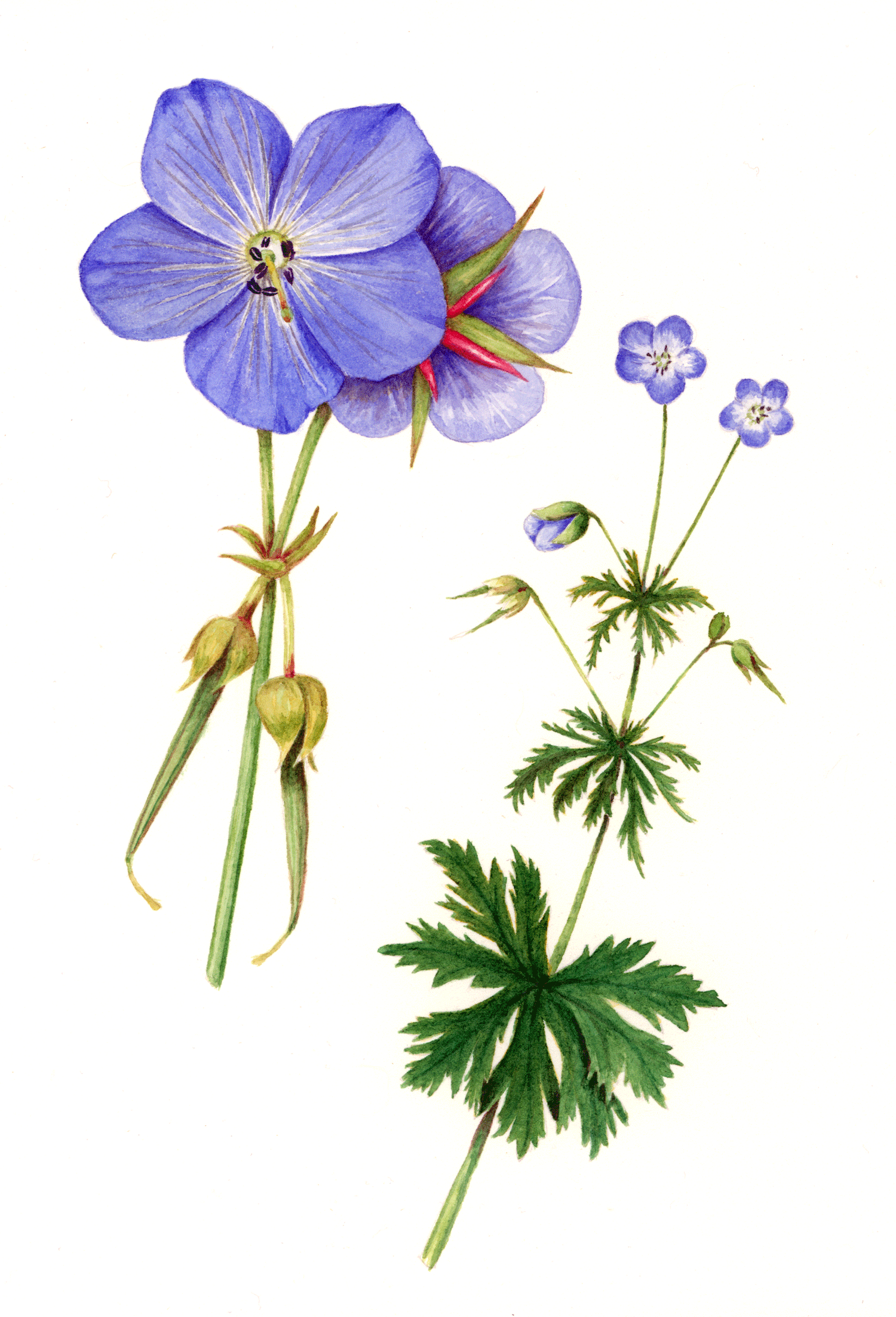
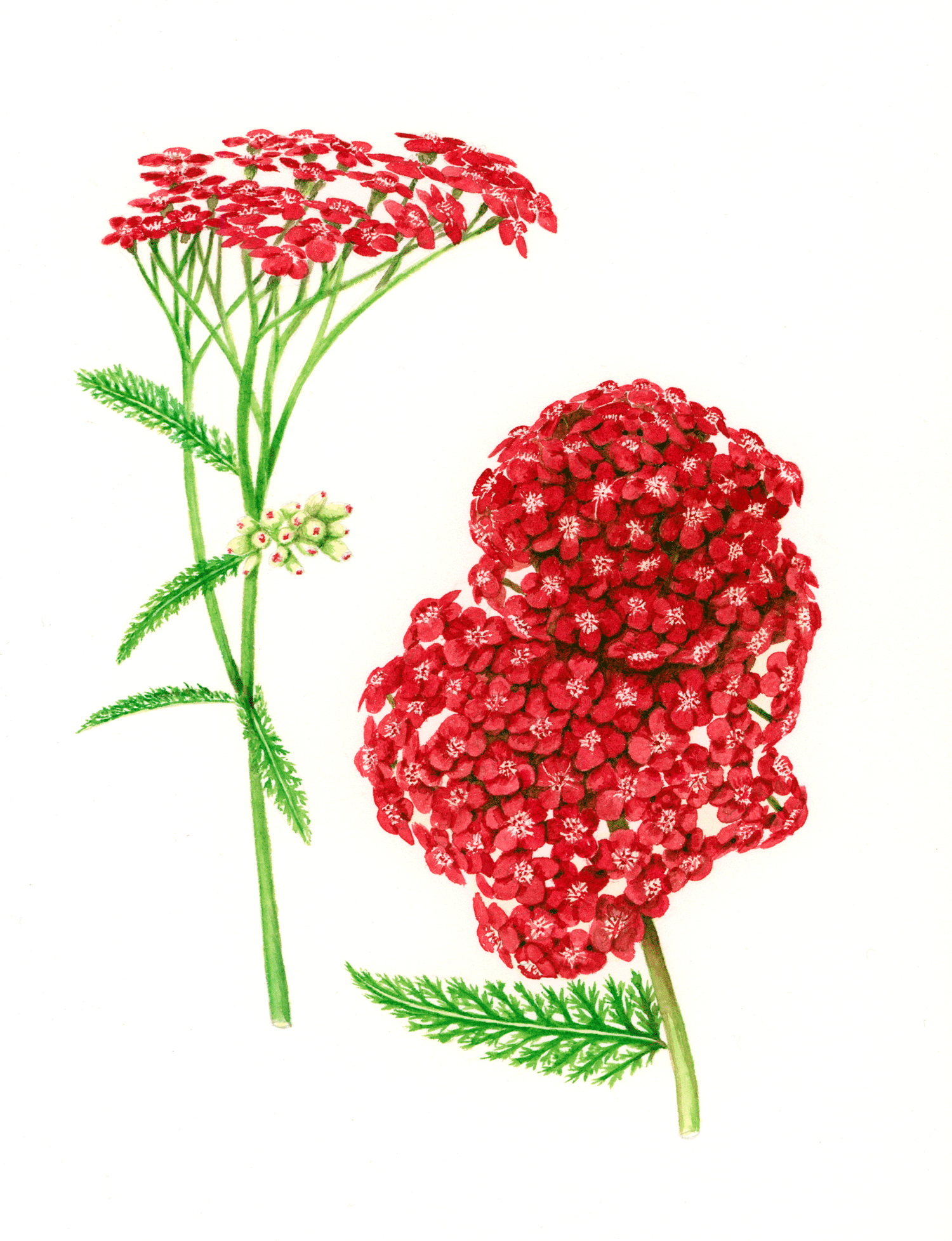
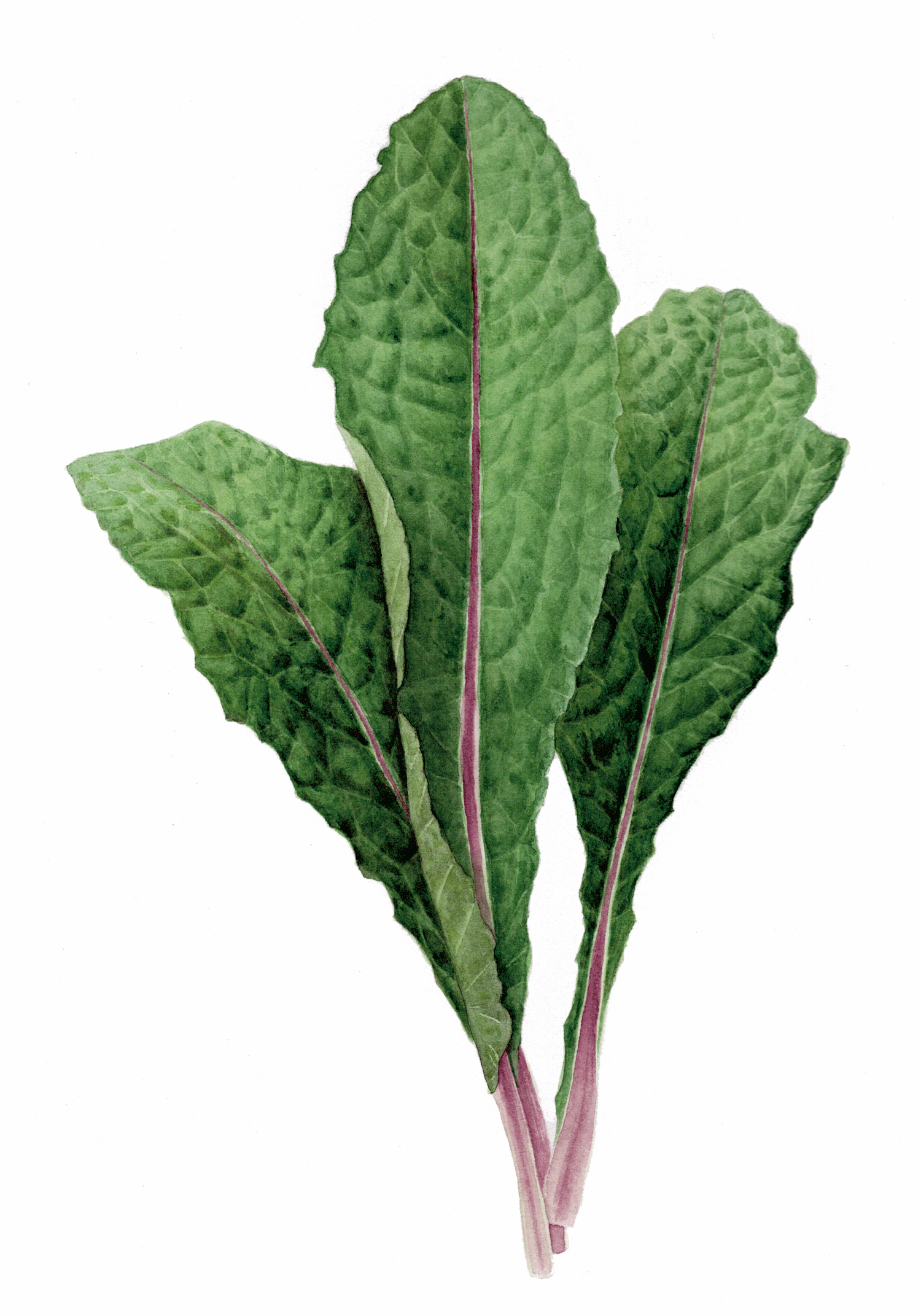
Illustrating botanical subject matter in watercolor is a time-honored tradition, with its ancient roots (pardon the pun) in illustrating plants to document and explain their medical properties. Fast forward to the Renaissance era, and we see the tradition expand beyond medicinal illustrations to include documenting flora (and fauna) as part of scientific inquiry. During the age of exploration, it was used to illustrate what was found in far-flung parts of the globe. And it has never gone away – people are as fascinated today by stunning, detailed, well-rendered botanical subject matter.
Indeed, it continues to have commercial value, as there are aspects for which illustration is still a better means to document the natural world than photography.
Unlike some watercolor techniques that rely on quickness, many botanical artists work very slowly, relying on skills such as observation, knowledge of rendering 3D form through color theory and shading, taking advantage of the characteristics of watercolors, and working through composition challenges to create stunningly realistic plant portraits. This workshop will introduce all of these technical elements and share what I’ve learned over the years about how to apply them.
ARTIST BIO Nora joined the field of science illustration as a mid-life career change after many years in the world of high tech. She graduated from the University of Washington’s Natural Science Illustration certificate program in Spring 2014, and is a full-time, self-employed artist/illustrator. Intricate details and patterns found in nature are endlessly fascinating; she enjoys the challenge of portraying them on paper. Watercolor – her primary medium – is a highly technical but powerful medium that allows her to construct illustrations in layers, always considering pigment characteristics and color theory to build forms and create depth. She mostly works for organizations like museums and zoos, government agencies, consumer products companies and academics. Find her online at:
www/norasherwood.com
FB www.facebook.com/NoraSherwoodArtandScienceIllustration Instagram www.instagram.com/norasherwood_science_art/
SUPPLY LIST
Drawing
- Drawing You could bring just a basic mechanical pencil, or a few drawing pencils.
- Pencil sharpener, if
- A clear ruler
- I work with both a kneaded eraser and a plastic (hi-polymer) eraser, and I love my Tombow Mono Zero eraser
- Drawing I like to have a sketch pad to work out ideas
- Optional: tracing paper (to transfer drawings to watercolor paper)
Basic watercolor I use only professional grade tube paints from brands like Daniel
Smith and Winsor&Newton. If there’s one thing I would recommend for folks who want to do well with watercolor, it would be to buy professional grade tube paints. Here are some colors I use a lot for botanical illustration, but please don’t feel the need to buy lots of new paints, I’m happy to share samples of paint with you. (You can try them out and see if you want to add them to your palette.)
- Winsor yellow
- Winsor transparent yellow
- Daniel Smith new gamboge
- Winsor permanent rose
- Alizarin crimson (any brand)
- Winsor violet
- Winsor blue or Daniel Smith phthalo blue (green shade)
- Daniel Smith raw umber
- Daniel Smith Payne’s grey
PAPER: I recommend Arches Watercolor Block 9″ x 12″, Hot Press, or similar
- I like synthetic round brushes like the Da Vinci Cosmotop Spin series, in sizes 6 and 3 or thereabouts. Just be sure you have some good, round brushes in small sizes, and any brand is fine. Make sure yours still have some “snap” to them, watercolor brushes do wear out.
- I am a fan of the butcher tray style of palette, but there are other styles that folks like. Please bring whatever works for you. Botanical painters are especially fond of porcelain palettes, so you might like to invest in one of those if you’re interested in trying them.
- Backing A backing board can be anything from a thin kitchen cutting board to a piece of wood, it just needs to hold the paper. 9″x12″ or larger would be fine.
- Optional: Dropper or Very handy for moving water and paint around.
- Optional: Artist or painters tape to stick paper to your backing